
How you make me feel; projection and its identification.
Why do we trust some people and not others? Why do we admire some people? Why do some people make us uncomfortable? Is it because they remind us of significant figures in our lives; our mother, our father, a brother or sister, a lover, a husband, wife, a teacher? Are they suitable objects for our projections? Projection is a ubiquitous feature of human nature. It is the cornerstone of evolution; what makes us human; the effect of an opposable thumb. As soon as we could throw, we could make things... Read more »
The past is another country. Or is it?
Friar Barnadine: "Thou hast committed--" Barabas: "Fornication-- but that was in another country / And besides, the wench is dead." Christopher Marlow (The Jew of Malta) What made people like Guy Burgess or Anthony Blunt rebel against their society, betray their country and spy for the soviet union? Was it a reaction against... Read more »
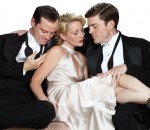
Design for Living? I don’t think it will work.
It should be easy, you know. The actual facts are so simple. I love you. You love me. You love Otto. I love Otto. Otto loves you. Otto loves me.’ Oh My God! Or as Mrs ‘Odge might say, ‘Well, ‘eres a pretty pickle.’ So why isn’t it easy? Why shouldn’t... Read more »
Keep on dancing
Every Saturday evening, sixteen million people turn on their televisions for two hours to watch Strictly Come Dancing, and turn on again the following night to see the results. But why? Why should a dance competition captivate the nation so much? It’s not Brucie’s jokes. And I can’t really believe... Read more »
Catherine; the tragedy for Jules, et Jim!
Catherine was one of those entrancing women, so full of life and fun, a free spirit, brave, sparky, vivacious – the kind of lively, fragile personality who lives on the edge; exciting, impulsive, passionate and very dangerous. Like a candle in the wind, she was never going to be tied... Read more »
Emma Bovary; incurable romantic or dangerous hysteric
Flaubert’s heroine didn’t start bad. She was a lively imaginative girl. She might have benefited from a bit of maternal constraint, but her mother died when she was just 11 and she was sent to a convent. There her religious fantasies took a romantic turn. She began reading the romantic... Read more »
The dangerous politics of love.
The seventeenth century was a bad time for women. They had no autonomy, no rights. They were treated as the property of men; they had to obey their husbands and fathers. Fathers would promise their daughters to men they didn’t love for political advantage. Husbands would keep their wives locked... Read more »
Love and Glory; the wondrous madness of it all.
'It’s still the same old story; a fight for love and glory; a case of do or die.’ It is 1885 and there’s trouble in the Balkans – as usual! Sergius, so ambitious for glory, leads a foolhardy cavalry charge against the Serbian machine guns. He’s not to know that the... Read more »
Beauty with Balls; an appreciation of Ingrid Bergman
I think I was in love with her from the start as she gazed steadily at me with moist lips and knowing eyes from the flickering monochrome screens of such classics as Casablanca, Notorious, Spellbound, The Bells of St Mary’s, and For whom the bell tolls. Her face expressed vulnerability and innocence,... Read more »
Charmed! The irresistable attractions of Violet Gordon Woodhouse.
Some women just have it, that magic; the ability to evoke adoration in others. Violet did. How else could she make four men fall in love with her so deeply that they devoted their lives to her. First there was Gordon, whom she married, then Bill, the love of her... Read more »
Dido’s enduring grievance.
She was devastated. After all she had come through, how could the Gods allow it to happen? Wasn’t she still grieving for her husband, Sychaeus, killed for his money by her own brother, Pygmalion. Hadn’t she had to take the gold and leave her home in Phoenicia at the dead... Read more »
When the dream fades, kill it off!
Frank and April Wheeler had it all. They were a charmed couple, or so it seemed to their neighbours and friends. He was virile and handsome, a whizz in the city, she was beautiful and an actress. They owned a pretty clapperboard house in the leafy suburbs. They had two... Read more »
Haunted! ‘Trauma’ and McGrath’s ghosts.
Charlie is a psychiatrist, an expert on trauma. His marriage to Agnes broke up after her brother, Danny, committed suicide. Danny was a Vietnamese veteran whose buddy was killed by a booby trap device right next to him. He was also Charlie’s patient. He blew his brains out after Charlie... Read more »
Dr Haggard’s Disease
It was 1937; and there was trouble on the horizon. They recognized each other at a funeral. There was a spark. Then they found they were sitting next to each other at the Cushing’s dinner party. He was Dr Edward Haggard, house surgeon at St Basil’s and a bit of... Read more »
Madly in love
When her husband, Max, is appointed director of an asylum in Essex, Stella is not overjoyed. She is bored; ‘dying of chronic neglect’. She resents the restrictions of her position and the limited perspectives of the other wives. To relieve the monotony, she develops an attraction to Edgar, a handsome... Read more »
Capturing the Look of Love; Waterhouse’s Women.
The long neck is bent, the skin pale, the gaze serious and sustained, sad yet determined, the lips are slightly parted, the body lithe, nubile, not a child but not yet a woman. Waterhouse's depictions of women express an ambiguity, an inscrutability, a mysterious, thoughtful reflection that enthrals and captivates.... Read more »
Failing Better.
'Ever tried? Ever failed? No matter. Try Again. Fail again. Fail better.' Samuel Beckett Don't give up! Learn from your mistakes. Do better next time. Remember Robert Bruce and the spider, Alfred and the cakes. Just pick yourself up, dust yourself down and start all over again. That seems be the message... Read more »
Show! Don’t tell! An appraisal of The Reader.
Show! Don't tell! Let the reader decide why the characters behave as they do. Keep them guessing. It's what can turn a good book into a great one. But, to be honest, I didn't think The Reader was a great book when I first read it about three months ago. ... Read more »
Death, desire and despair at the Odioun; the pholly of Phedre
She has desired Hippolytus since the day she married his father. Proud, aloof, disdainful of women; he has all the strength of the father but none of his sire's weakness for sexual temptation, or so it seems. He is a real challenge. She has to possess him, but Hippolytus is... Read more »